
Reference case · RR Donnelley Partnership
PNX Software has been serving as the preferred supplier to RR Donnelley for a decade, delivering system software development services over the past 10 years. For RR Donnelley’s Asia region, we have deployed integrated solutions spanning prepress media, digital production management, and order fulfillment — establishing a comprehensive digital management ecosystem that covers the entire customer‑to‑delivery lifecycle.
Client Profile: Global Printing Giant
RR Donnelley, founded in 1864, has grown over 160 years to become the world's second-largest commercial printing company, with annual revenue exceeding $5 billion. As a key part of its global strategy, the Asia region operates 8 major production bases across China and India, serving over a dozen industries including publishing, consumer electronics, finance, retail, and pharmaceuticals.
Historical Heritage
- Founded in Chicago in 1864; served as the official printer for the 1933 Chicago World's Fair and again for the 2010 Shanghai World Expo.
- Listed on the NASDAQ Global Select Market in 2009 (ticker: RRD); currently employs approximately 32,000 people worldwide.
- Recognized as one of the global "Big Four" in the printing industry, alongside Quebecor (Canada) and Dai Nippon Printing (Japan).
Asia Footprint
- Entered China in 1993, with the Shenzhen plant commencing production in 1994. Currently operates 7 factories in China (Shenzhen, Shanghai, Beijing, Dongguan Liaobu, Dongguan Humen, Chengdu, Suzhou).
- Established 5 pre-press media centers (Shanghai, Shenzhen, Beijing, Dongguan Liaobu, Guangzhou) and 3 new product development centers.
- Service network covers Hong Kong and Taipei, with 1 factory in India, forming a comprehensive Asia-Pacific production capacity layout.
Business Scale
- Asia region annual revenue of approximately USD 640 million, with a total workforce of about 9,000 employees, ranking first among China's Top 100 Printing Companies.
- Business spans over a dozen industries including publishing, consumer electronics, finance, retail, automotive, pharmaceuticals, and cosmetics.
- RR Donnelley serves a broad client base, including retail giants such as CVS, Home Depot, and Kroger, as well as fashion and cosmetics brands like NIKE, BURBERRY, FANCL, ONLY, and Macy's.
Business Challenges: Pain Points in Digital Transformation
During the operation of 8 major production bases across Asia serving over a dozen industries, RR Donnelley faces three core challenges: multi-plant collaboration efficiency, the level of digitalization in pre-press media, and supply chain response speed. As customer demand for personalized printing and short-cycle delivery continues to grow, the traditional pre-press processing model that relies heavily on manual experience, along with the fragmented supply chain management system, urgently requires systematic upgrades.
Operational Management Challenges
- Complex multi-plant coordination:Order allocation, capacity scheduling, and inventory management across 7 factories in China still rely on traditional methods, leaving room for improved collaboration efficiency.
- Pre-press media processing bottleneck:High-volume tasks such as high-precision scanning, color management, and file layout are challenged by manual processing efficiency and standardization levels.
- Lagging supply chain responsiveness:Faced with growing customer demand for short-lead-time and quick-turnaround orders, the response chain from order receipt to production is lengthy, requiring systematic support to enable flexible production capabilities.
Technical System Challenges
- System silos:Each factory and each production stage operates on independent systems, making real-time data sharing difficult and creating information silos that hinder decision-making efficiency.
- Difficulties in process standardization:Significant variations in production workflows across different factories and product lines, with a lack of unified digital standards and a process knowledge base.
- Quality traceability system:Facing high-end packaging clients in industries such as pharmaceuticals and food, there is a need to establish a comprehensive product lifecycle quality traceability system.
Solution: System Implementation Panorama
We implemented a systematic solution for RR Donnelley Asia covering three core areas — pre-press media, digital printing production management, and order processing — building a full-process digital management system from customer order placement to product delivery.
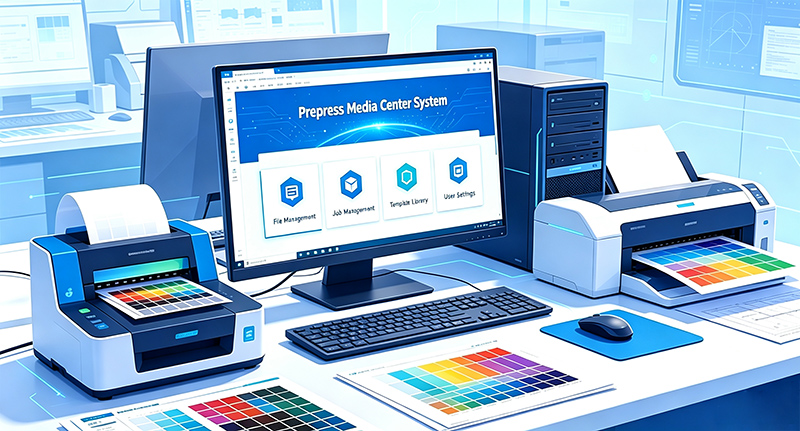
Pre-Press Media Center System
- Implemented an automated pre-press processing platform covering the entire workflow of high-precision scanning, color management, design layout, and file management, replacing traditional manual processing models.
- Established a standardized color management database to ensure color consistency across multiple factories including Shenzhen, Shanghai, and Beijing, enhancing cross-factory collaboration efficiency.
- Deployed file version management and intelligent proofreading systems to reduce rework caused by pre-press errors and shorten the pre-press processing cycle.
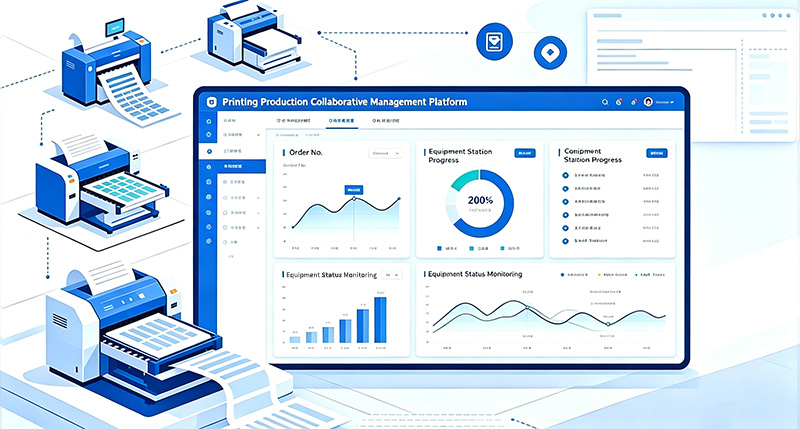
Production Management Collaboration Platform
- Built a multi-factory production collaboration system enabling capacity visualization management across 7 factories in China, including Shenzhen, Shanghai, Beijing, and Dongguan.
- Implemented an intelligent scheduling module that automatically optimizes production plans based on order priority, equipment status, and material inventory, improving equipment utilization.
- Established a process knowledge base and standardized workflow system, distilling 160 years of printing expertise into reusable digital process standards.
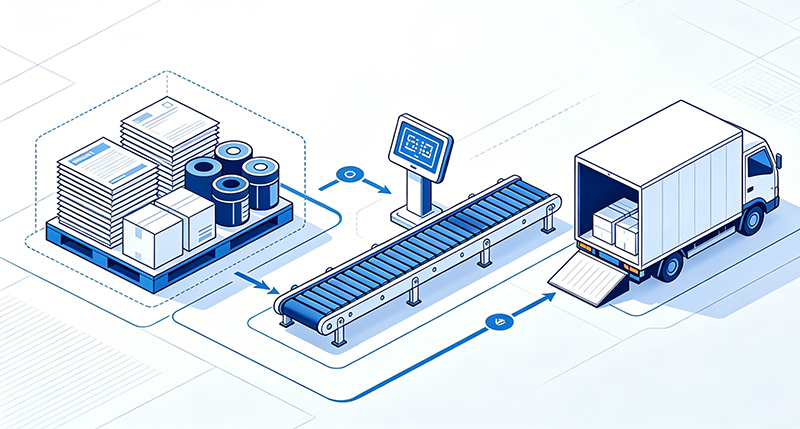
Order Processing System
- Automated processing of digital assets into press control software, enabling real-time order visibility and alerting to optimize order processing efficiency.
- Integrated with SAP and Oracle systems, covering orders, products, logistics and delivery, with efficient automation of order and user data as well as supporting data.
- Deployed a professional digital asset management system for the management and transfer of large digital files, enabling automated workflows across all participating departments — from clients, design, workshop, to production.
Implementation Path: Phased Rollout Strategy
Phase 1: Discovery & Blueprint (3 Months)
- Conducted in-depth business research across 8 production bases, interviewing over 200 key personnel.
- Designed a system architecture blueprint covering the three major areas of pre‑press, production, and logistics.
- Completed the pilot environment setup at the Shenzhen plant, forming a viable implementation plan.
Phase 2: Pilot Implementation (6 Months)
- Deployed and migrated data for the pre‑press, production, and logistics systems at the Shenzhen plant.
- Executed a 2‑month parallel operation to validate and ensure a smooth transition from the old to the new system.
- Consolidated standardized implementation templates and operating manuals in preparation for broader rollout.
Phase 3: Full Rollout (9 Months)
- Rolled out the system to the plants in Shanghai, Beijing, Dongguan, Chengdu, Suzhou, and India, following a "domestic first, overseas later" sequence.
- Established regional implementation teams to maintain consistency in implementation quality.
- Completed data integration across the entire region, launching the multi‑factory collaborative operations platform for Asia.
The project adopted a three‑phase strategy of "Discovery & Design – Pilot Validation – Full Rollout," completing system deployment across 8 production bases in Asia within 18 months. The 6‑month pilot at the Shenzhen plant produced standardized implementation templates that were then rapidly replicated across the other 7 plants.
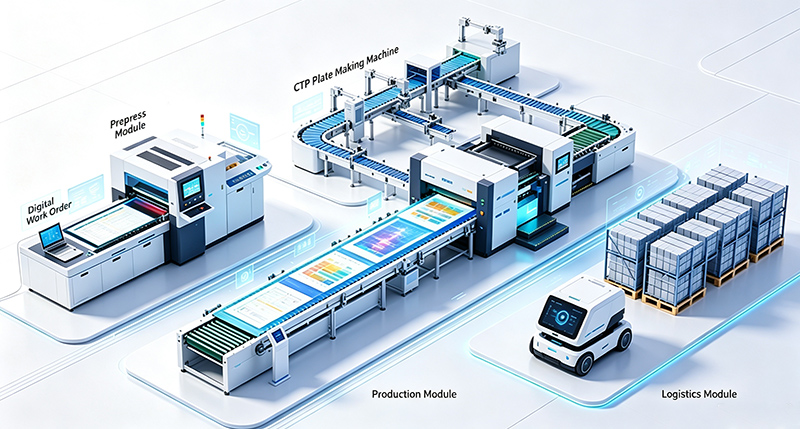
Implementation Results: Quantified Value Realized
Through the overall system and digital asset management, RR Donnelley Asia achieved significant results: pre‑press processing efficiency increased by 40%, production scheduling efficiency improved by 35%, and inventory turnover rose by 25%. The share of cross‑factory collaborative orders grew from 15% to 40%, while the pre‑press error rate dropped by 60%. In addition, automated processing and management of outsourced orders were realized. These outcomes fully validate the value of digital systems for multi‑factory collaborative operations within a large‑scale printing group.
Key Efficiency Indicator Improvement Comparison (%)
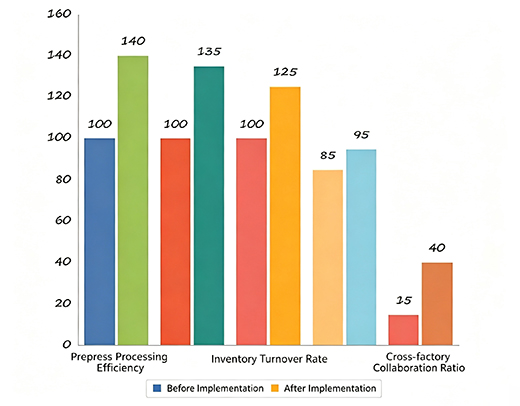
▲ Source: RR Donnelley Asia Regional Operations Annual Report
Client Value: Strategic-Level Deeper Benefits
The system implementation not only delivered immediate operational efficiency gains for RR Donnelley, but also built three core strategic capabilities: establishing a replicable digital factory construction model to support future M&A integration; achieving the digital preservation and inheritance of 160 years of printing process knowledge; and building flexible production capabilities that significantly enhance responsiveness to short-lead-time and quick-turnaround orders in the high-end packaging market, solidifying its industry-leading position.
Operational Standardization Capability
- Standardization system: Established a digital operations standard system covering 8 Asian factories, providing a directly replicable implementation template for future new plant construction or M&A integration.
- Information integration: Eliminated information silos between factories through systematic data integration, enabling true group-level collaborative operations.
- Real-time decision-making: Built a real-time data cockpit, allowing management to monitor capacity, inventory, and delivery status across all factories in real time, accelerating decision-making responsiveness.
Knowledge Preservation & Succession
- Process digitization: Converted printing process knowledge previously dispersed among experienced employees into a systematic digital process library, reducing reliance on individual expertise.
- Quality consistency: Established databases for key process parameters such as color management and quality control, ensuring cross-factory and cross-batch product consistency.
- Talent development: Formulated standardized operating procedures and training systems, shortening new employee onboarding cycles by 30% and strengthening the talent pipeline.
Market Competitiveness Enhancement
- Flexible production: Significantly enhanced flexible production capabilities, enabling the ability to undertake more short-lead-time, quick-turnaround, and personalized/customized orders, expanding high-value-added business.
- Premium market: Rapidly meets the strict quality traceability requirements of premium industries such as pharmaceuticals, food, and cosmetics, expanding market share in high-end packaging.
- Customer stickiness: Through supply chain collaboration optimization, provides clients with one-stop integrated communication solutions from design to delivery, strengthening customer loyalty.
Lessons Learned: Key Success Factors
The success of the RR Donnelley project was driven by four key factors: sustained commitment and resource allocation from senior leadership, a robust "pilot-validate-rollout" implementation strategy, a joint team model that deeply integrated business and technical expertise, and systematic change management with comprehensive user training. These experiences provide a replicable implementation pathway for digital transformation in large multinational manufacturing enterprises.
Project Management Factors
- Secured sustained commitment from RR Donnelley Asia's senior leadership, establishing a project steering committee composed of executives from both sides to ensure efficient decision-making on critical issues.
- Adopted a "pilot plant - proven rollout" model, using a 6-month pilot at the Shenzhen plant to validate solution feasibility and effectively control risks during full-scale deployment.
- Established regional implementation teams across 8 factories, with dedicated project managers at each plant to ensure implementation quality and schedule adherence.
Change Management Factors
- Conducted tiered and role-specific user training, designing differentiated training content and formats for management, key users, and frontline operators.
- Established a "system ambassador" mechanism, cultivating internal experts at each plant to build ongoing system optimization and knowledge transfer capabilities.
- Prioritized user experience optimization, continuously iterating system functionalities based on frontline feedback to improve user acceptance and engagement.
Technical Implementation Factors
- Adhered to the principle of "business-led, technology-enabled," with implementation teams composed of business experts and technical specialists in a 1:1 ratio to ensure the system closely aligned with actual business scenarios.
- Established unified data standards and interface specifications to ensure data integration across the pre‑press, production, and logistics systems, as well as with legacy systems.
- Adopted a phased data migration strategy, preserving historical data integrity and ensuring business continuity remained unaffected.